
Craft · 4 min read
Curved Stone: Setting Travertine Around a Bay Window
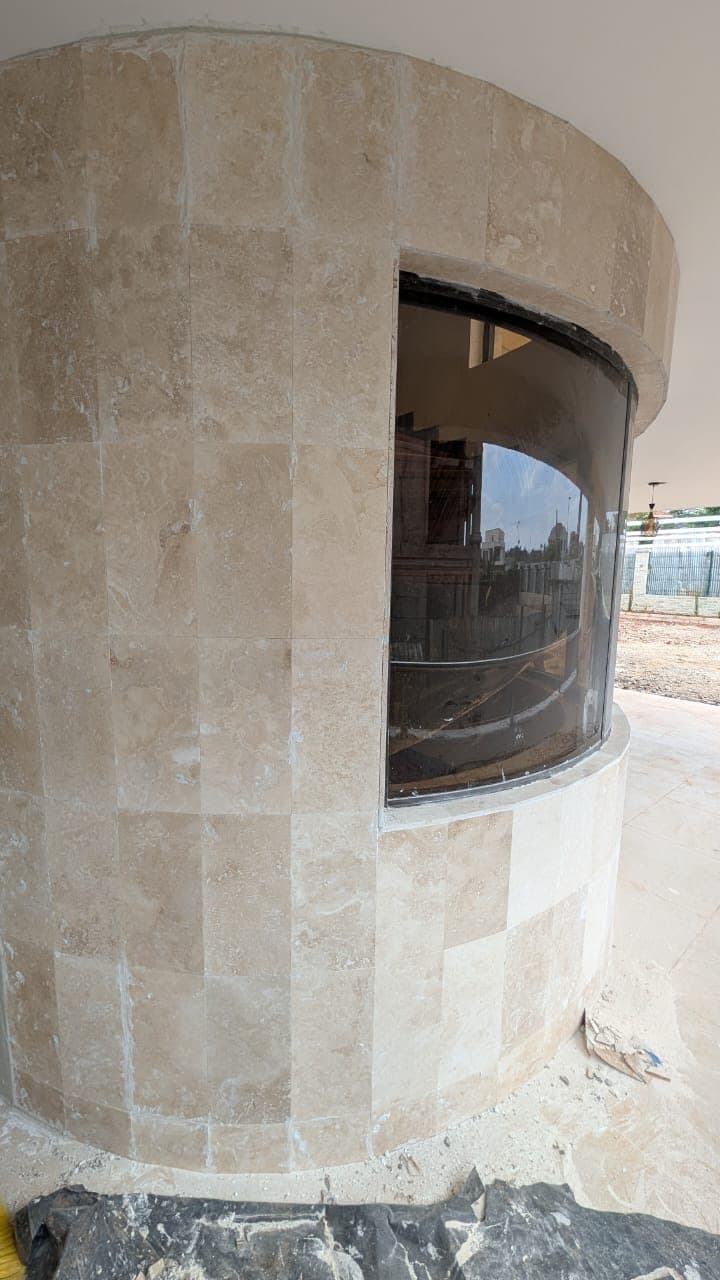
The client wanted a bay that reads as one continuous drum of stone. No visible cuts, no tapering joints, no cheating with a rendered band at the base. Here is how that gets built.
The geometry problem
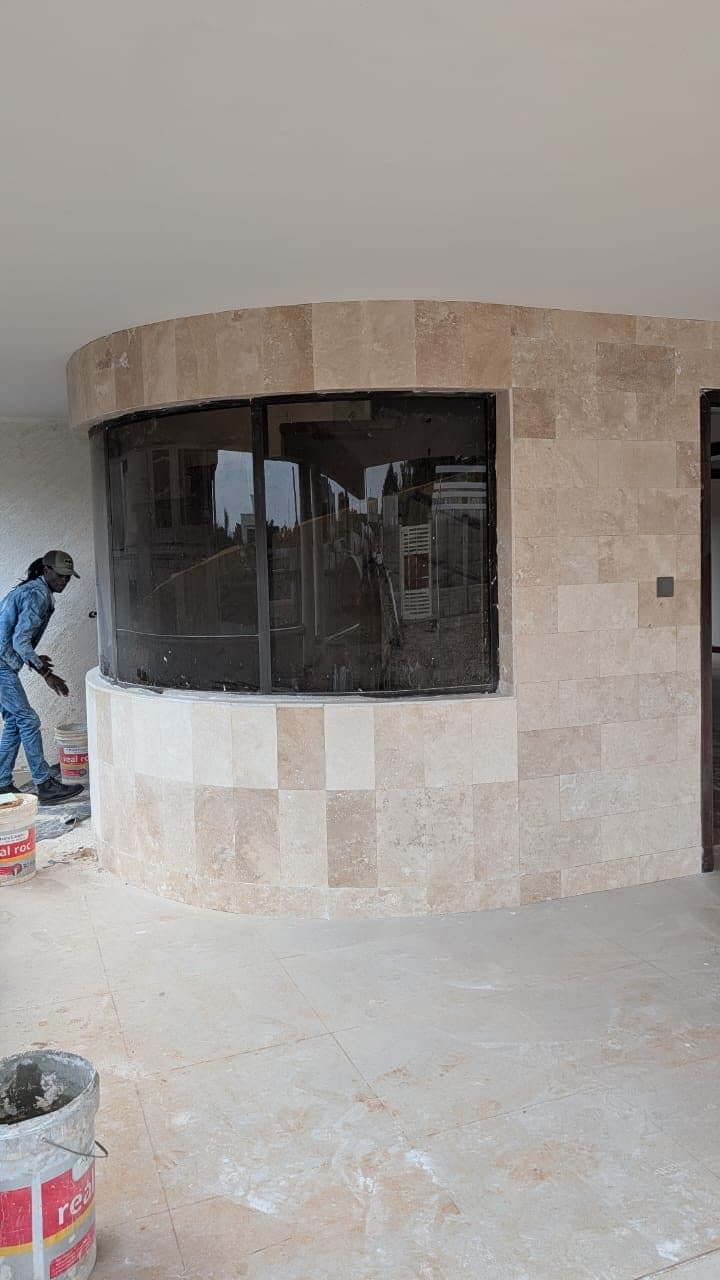
Rectangular tiles on a curve want to open at one edge and close at the other. The only honest fix is to taper each piece by hand so the joint stays parallel, then adjust the coursing as you rise. Every stone here was cut to its own dimension.
A curved bay is not a square-metre rate. It is a week of setting-out and a mason who has done it before.
Dry-lay everything, twice
We dry-lay the entire elevation on the floor first, number every piece, and only then start fixing. Travertine is a natural stone: the veining has to run in sequence, or the drum looks like a patchwork from three metres away.
Meeting the glass
The curved glazing arrives with its own tolerance, and stone has none. We set the frame first, scribe the stone to it, and leave a shadow gap rather than trying to butt two curved materials together — a joint that would open with the first temperature swing.
Why it matters
Details like this are why we survey before we quote. A curved bay is not a square-metre rate; it is a week of setting-out and a mason who has done it before.