
Planning · 25 min read
Interior Designers in Nairobi: Costs, Process & How to Hire
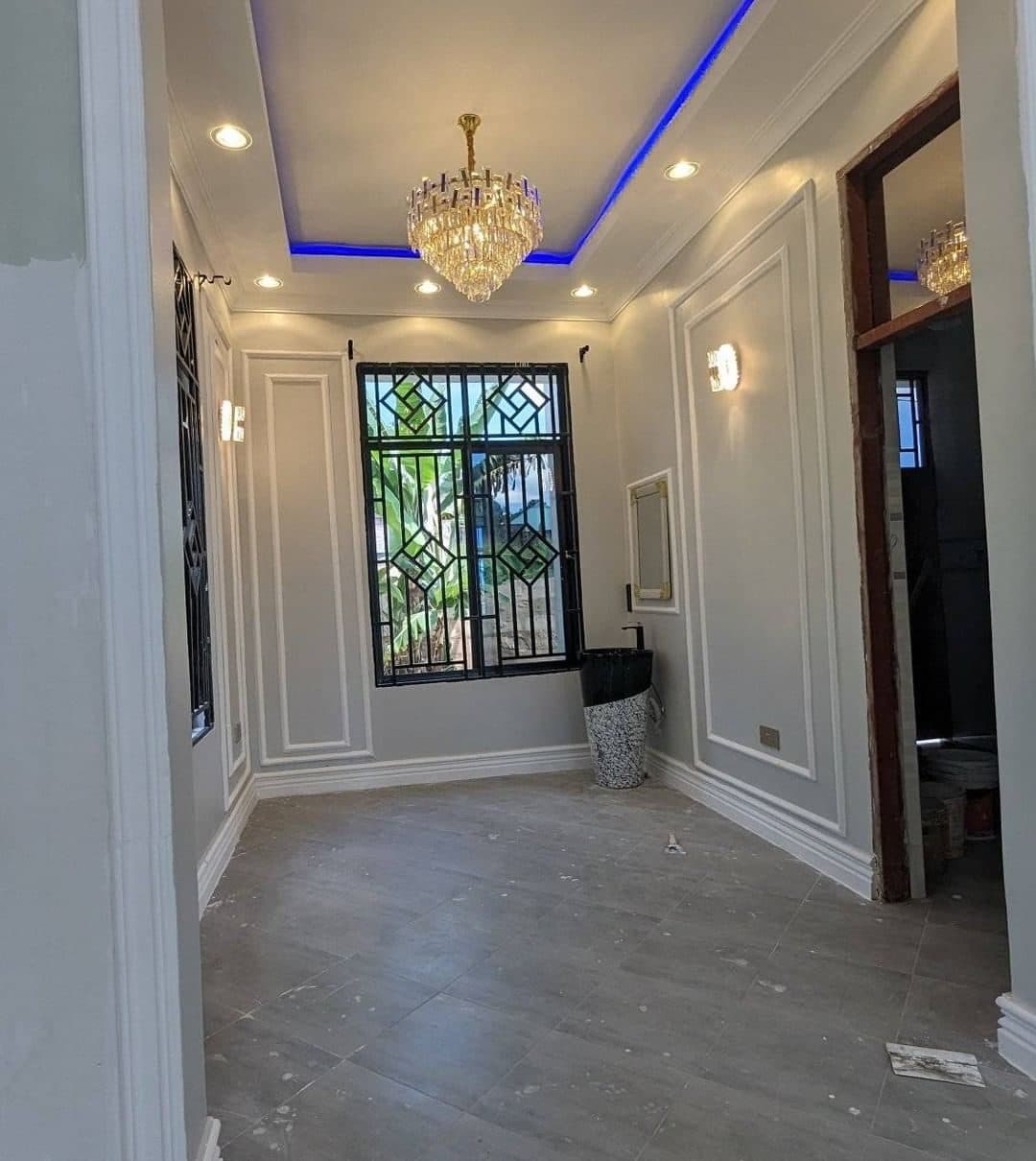
Searching for interior designers in Nairobi returns hundreds of names, from one-person studios working out of a laptop to full design-and-build companies with their own joinery teams. They all use the same words — bespoke, luxury, turnkey — and most of their Instagram pages look equally convincing. Yet the experience of working with them, and the room you end up living or working in, can differ enormously. This guide is written to close that gap. It explains what an interior design company in Nairobi actually does, the different kinds of firms you will meet, how interior design services are priced in Kenya, what a professional process looks like from first call to handover, and the questions that separate a safe pair of hands from an expensive lesson.
It is long on purpose. Hiring an interior designer is one of the larger discretionary decisions most households and businesses make, and the people who are happiest at the end are almost always the ones who understood the process before they started. Read it through once, then use the headings to come back to the part you need.
What an interior designer actually does
The most common misunderstanding about interior design is that it is decoration: choosing a sofa, a paint colour and some cushions. Decoration is part of it, and it matters, but it is the last ten percent. Professional interior design is the planning of how a space works and how it is built.
A competent interior designer in Nairobi will do most or all of the following on a typical project:
- Take a proper brief. Who uses the space, at what times, for what? What do you own that has to fit? What irritates you about the room today? A brief is a list of problems to solve, not a mood board.
- Survey the space. Accurate site measurements, including ceiling heights, beam positions, window sills, socket and plumbing points, and the walls that are not quite square — which, in most Nairobi apartments, is all of them.
- Plan the layout. Where the kitchen triangle sits, how doors swing, how wide the walkway is between the bed and the wardrobe, where the television can go without glare from the window.
- Design the fixed elements. Kitchens, wardrobes, wall panelling, ceilings, doors, vanities, media walls and built-in shelving. These are the parts of a room you cannot return to a shop, so they carry most of the risk and most of the value.
- Specify materials and hardware. Boards, worktops, laminates, veneers, paints, hinges, drawer runners, handles and lighting — each chosen for how it performs in Kenyan conditions as well as how it looks.
- Produce drawings and visuals. Plans, elevations and often 3D renders, so that you approve what will be built before any board is cut.
- Price the work. A written, itemised quotation that states what is included and what is not.
- Manage production and installation. Workshop fabrication, site preparation, delivery, fitting, electrical coordination and snagging.
- Hand over. A finished, cleaned space, with care guidance and a clear point of contact for any adjustment afterwards.
Not every firm does every step. Understanding which steps a firm covers — and which it leaves to you — is the single most useful thing you can learn before you hire.
Interior designer, interior decorator, fundi or design-and-build company?
In Nairobi you will come across four broad kinds of provider. None is wrong; they suit different jobs.
The interior decorator or stylist
A decorator works with what is already built. They select furniture, rugs, curtains, art, lamps and accessories, and they are very good value when the bones of a room are sound and it simply feels unfinished. They do not usually design joinery, move services or manage contractors. If your kitchen and wardrobes are already in and you like them, a decorator may be exactly what you need.
The design consultant
A consultant designs the space — layouts, drawings, material schedules, sometimes renders — and hands you a package. You then find your own carpenters, gypsum installers, electricians and painters to build it. This can work well if you have a trusted contractor and the time to supervise. The risk is the gap between drawing and reality: when something does not fit, the designer and the fundi each point at the other, and you are the one standing in the middle.
The fundi or independent carpenter
A skilled carpenter can build an excellent wardrobe or kitchen, and for a single, simple item that may be all you need. What a carpenter typically does not provide is design thinking across the whole room: how the wardrobe relates to the ceiling bulkhead, whether the lighting has been planned before the boards go up, whether the finish will match the doors ordered from someone else. Quality also varies widely, and you are usually paying for materials upfront with little documentation.
The design-and-build interior design company
A design-and-build company designs the space and then manufactures and installs it with its own teams. One contract, one quotation, one party responsible. This is what people usually mean when they search for a full-service interior design company or turnkey interior design, and it is how Royalwoods Interiors works. The advantage is accountability: the people who drew the kitchen are the people who have to make it fit. The trade-off is that you are relying on one firm, so choosing that firm carefully matters more.
The best question to ask any interior design company is not whether they can do the work, but who exactly will be on your site and who is responsible when something does not fit.
For a shorter comparison of these routes, see our guide on how to choose an interior designer in Nairobi.
Do you actually need an interior designer?
Not always, and a good one will tell you so. As a rule of thumb, professional interior design services pay for themselves when at least one of these is true:
- You are fitting out a new or shell property. New houses and apartments in Nairobi are often handed over with bare walls, basic lighting points and no storage. Decisions made in the first weeks — ceiling design, socket positions, kitchen layout — are expensive to reverse later. Our new house interior fit-out checklist lists them in order.
- You are renovating more than one room. Once several trades are involved, sequencing becomes the real job. Painting before the gypsum is sanded, or tiling before the kitchen carcasses are levelled, wastes money.
- The work involves built-in joinery. Fitted wardrobes, kitchens and wall units are made to measure. Mistakes are permanent.
- The space is commercial. An office, shop, clinic or restaurant has to work for staff and customers from the first day, and delay has a direct cost in rent.
- You are short of time. Managing four or five separate tradespeople is a part-time job. Many clients simply do not have the weekdays to spare.
- You are investing for resale or rental. A coherent, well-built interior photographs better, lets faster and holds its value.
If you only need a room refreshed with new furniture and paint, a stylist or a weekend of your own effort may be the better spend. Saying so costs a good designer nothing, because the clients who come back later with a real project remember who was straight with them.
Interior design services in Nairobi: what is on offer
Interior design services in Nairobi fall into a handful of categories. Most firms specialise in some and subcontract the rest; ask which is which.
Space planning and concept design
The layout, the furniture plan, the overall look and material palette. This is the stage at which a designer earns their fee: moving a door 300 millimetres or turning a kitchen from a galley into an L-shape costs nothing on paper and transforms how the home works.
Custom kitchens and cabinetry
The kitchen is the most technically demanding room in a house. It combines plumbing, electrics, heat, moisture and heavy daily use with the most visible joinery in the home. A kitchen designer should be talking to you about workflow, appliance sizes, carcass board, worktop material and extraction — not only door colours. See our custom kitchens and cabinetry service and the guide to kitchen cabinet materials in Kenya.
Fitted wardrobes and walk-in closets
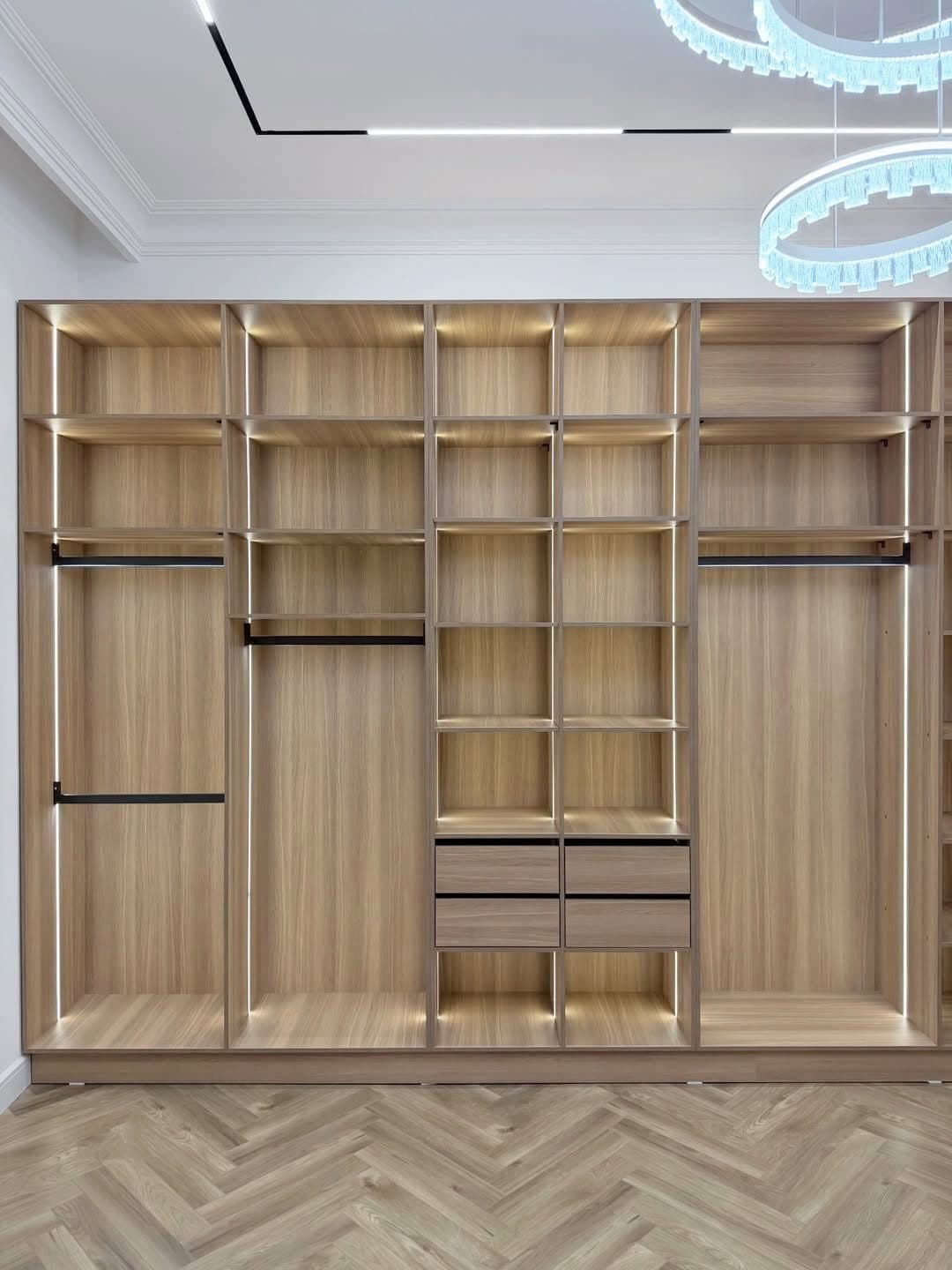
Storage designed around what you own. Full-height doors, internal drawers, shoe racks, lit display sections and dressing tables. Wardrobes are where the difference between a made-to-measure unit and a flat-pack one is most obvious. Our guide to fitted wardrobe costs in Nairobi explains what drives the price.
Wall panelling and feature walls
Fluted panels, classical wainscoting, bamboo charcoal boards, stone-effect slabs and upholstered headboards. Panelling changes the character of a room faster than almost any other intervention. See wall panelling and wainscoting.
Ceilings, cornices and lighting
Gypsum ceilings, tray and coffered designs, LED coves, cornices and mouldings. The ceiling is the largest uninterrupted surface in any room and the home of most of its lighting, yet it is often an afterthought. See ceilings, cornices and mouldings and our gypsum ceiling design guide.
Doors and architectural joinery
Internal doors, frames, architraves, skirting, staircases and balustrades. These are the details that make a house feel solid. See doors and architectural joinery.
Full interior fit-outs
Everything above, coordinated as one project with one programme and one handover. This is the turnkey route. See full interior fit-outs and our in-depth guide to turnkey interior design and renovation in Nairobi.
Residential and commercial interior design are different disciplines
A firm that produces beautiful homes is not automatically good at offices, and the reverse is also true.
Residential interior design is personal. The brief is about a family's routines, tastes and belongings. Decisions are emotional as well as practical, timelines flex around school terms and travel, and the measure of success is how the home feels on an ordinary Tuesday evening. Our room-by-room guide to residential interior design in Nairobi covers houses, apartments and villas.
Commercial interior design is operational. The brief is about headcount, workflow, brand, compliance and the date the lease starts costing money. Materials have to survive hundreds of people a day. Landlords and building managers impose rules about working hours, lifts and approvals. The measure of success is whether the business opens on time and works. See our guide to office and commercial interior design in Nairobi.
When you shortlist firms, ask to see finished work of the same type as yours.
Interior design by property type
The same designer will approach a studio apartment and a five-bedroom house quite differently. Knowing what matters most for your kind of property helps you brief well.
Apartments
Most interior designers for apartments in Nairobi spend their time on one problem: storage in limited space. The answers are full-height joinery that uses the wall up to the ceiling, sliding doors where a hinged door would hit the bed, furniture that does two jobs and a restrained palette that lets a small room breathe. Apartment projects also bring practical constraints — lift sizes, management rules and neighbours — that an experienced firm plans around. See small apartment storage ideas.
Townhouses and maisonettes
Stairs, split levels and awkward under-stair voids define these homes. The design opportunity is usually in circulation space: the entry, the landing, the area under the stairs. Good joinery turns each of them into something useful.
Stand-alone houses and villas
More space means more decisions, and the challenge shifts from fitting things in to keeping the home coherent. A house designed room by room, over several years, by different people rarely feels like one home. A single palette, repeated details and a consistent standard of hardware are what hold a large house together.
Rental and investment units
Durability and broad appeal take priority over personal taste. Neutral, hard-wearing finishes, simple layouts and solid hardware reduce maintenance and vacancy. It is worth designing one unit carefully and repeating it.
Furnished apartments and short-stay units
These have to photograph well and survive constant turnover. Lighting, a strong feature wall and robust, easily cleaned surfaces matter more than expensive materials.
How much do interior designers in Nairobi charge?
This is the question everyone wants answered first and the one that is hardest to answer honestly in a single number. Interior design costs in Kenya depend on what is being built far more than on who is designing it. It is more useful to understand how firms charge and what moves a quotation up or down.
The four common pricing models
- Fixed design fee. A set amount for the design package — drawings, renders, material schedule. Common with design consultants. You then pay contractors separately for the build.
- Percentage of project cost. The designer charges a percentage of the total construction and furnishing budget. This aligns the fee to the size of the job, though it can feel as if the designer is rewarded for spending more.
- Per square metre or per room. Often used for concept design on larger homes and offices. Easy to compare, but it tells you nothing about the quality of what will be built.
- Design-and-build quotation. The design work is included in, or credited against, an itemised quotation for manufacture and installation. You see one total for the finished result. This is the most common model among full-service firms in Nairobi, because most clients want to know what the finished kitchen costs, not what the drawings cost.
Before you compare firms, make sure you are comparing the same model. A low design fee followed by an open-ended build is not cheaper than a higher all-in quotation.
What actually drives the cost
Whatever the pricing model, the same variables decide the final figure:
- Scope. A single wardrobe is a different order of magnitude from a whole-house fit-out. This sounds obvious, but scope creep — "while you are here, could you also…" — is the main reason budgets are exceeded.
- Size. Joinery is broadly priced by running metre or square metre of face; ceilings and panelling by area.
- Materials. The spread between entry-level and premium is wide. Melamine-faced board versus moisture-resistant MDF with a lacquer finish; laminate worktops versus quartz or granite; local hardwood versus imported veneer.
- Hardware. Soft-close hinges, full-extension drawer runners, lift-up mechanisms and pull-out larders are small items that add up quickly, and they are exactly where cheap quotations save money invisibly.
- Finish complexity. Plain flat doors are fastest to make. Fluted, shaker, curved, glass-fronted and hand-painted doors each add workshop hours.
- Lighting and electrical work. LED strips, drivers, sensors and new socket positions.
- Site conditions. Upper-floor apartments without a service lift, restricted working hours, walls that need correcting before anything can be fixed to them.
- Timeline. A compressed programme means overtime and parallel crews.
Planning by budget band
It helps to think in bands rather than precise figures, and to treat the following strictly as orientation: every project is priced from its own drawings.
- Under KES 1 million. Typically one or two well-defined elements: a set of fitted wardrobes, a compact kitchen, a media wall with panelling, or a ceiling and lighting scheme for a living room.
- KES 1 million to 3 million. A substantial part of a home: kitchen plus wardrobes for a two or three-bedroom apartment, often with a feature wall and ceiling work in the main living area.
- KES 3 million to 6 million. A full fit-out of a mid-sized apartment or a significant part of a house, with coordinated joinery, ceilings, panelling, doors and lighting.
- KES 6 million and above. Whole-house and villa fit-outs, premium materials throughout, or commercial projects of meaningful floor area.
The honest way to get a number is to ask for an itemised quotation against a measured design. Any figure offered before a site visit is a guess.
Affordable interior designers in Nairobi: what "affordable" should mean
Many people search for affordable interior designers in Nairobi, and it is a reasonable thing to want. But "affordable" and "cheapest" are different ideas. The cheapest quotation is almost always cheap for a reason you cannot see on the day of installation: thinner board, unsealed edges, hinges that sag within a year, no moisture protection behind the sink, no allowance for making good.
Genuinely affordable interior design means spending in the right order:
- Spend on what you touch and what carries weight. Hinges, runners, worktops, carcass board.
- Save on what is easily changed later. Handles, decorative lighting, loose furniture, paint colours.
- Phase the work. Do the kitchen and master wardrobe properly now; add the guest rooms next year. A good firm will design the whole home at once so the phases match.
- Keep the design simple. Clean, flat-fronted joinery in a good board looks better and lasts longer than elaborate detail in a poor one.
A designer who helps you make those trade-offs openly is giving you affordability. One who simply undercuts everyone is giving you risk.
The interior design process, step by step
Processes vary between firms, but a professional one always has the same backbone. If a company cannot describe its process in roughly these terms, treat that as information.
1. First conversation
A call or WhatsApp exchange to understand the project: what the space is, where it is, what you want done, your rough budget and your timing. A good firm will ask more questions than it answers at this stage, and will tell you early if the project is not a fit.
2. Interior design consultation and site visit
The designer visits the property, measures it properly and listens. Bring whatever you have: floor plans, photographs of rooms you like, a list of the things that must fit. The most useful input is honest detail about how you live — how many pairs of shoes, whether you cook every day, who works from home. An interior design consultation in Nairobi may be free or charged depending on the firm and the distance; ask in advance, and ask whether any fee is credited against the project.
3. Concept and layout
The designer returns with a proposed layout and a direction for materials and style. This is the moment for big changes. Move the island, swap the wardrobe wall, question everything. It is free to change a drawing.
4. Detailed design and visuals
Elevations of every piece of joinery, with dimensions; material and colour selections; lighting positions; usually 3D renders so you can see the result. You should be shown real samples of the boards, worktops and finishes — a screen never shows colour or texture accurately.
5. Quotation
An itemised, written quotation listing each element, its materials and its price, together with payment terms, the programme and what is excluded. Read the exclusions carefully: electrical work, plumbing alterations, appliances, painting and making good are the usual suspects.
6. Agreement and deposit
A signed quotation or contract and a deposit that secures materials and a production slot. Payment is normally staged — commonly a deposit, a payment at delivery to site or mid-installation, and a balance at handover. Be wary of anyone asking for the full amount upfront.
7. Production
Joinery is manufactured in the workshop while site preparation — ceilings, first-fix electrical work, any wall correction — proceeds in parallel. This is the quiet phase, and it is where a firm's organisation shows.
8. Installation
Units are delivered and fitted, worktops templated and installed, panelling fixed, lighting connected, doors hung and adjusted. A tidy site with floor protection is a reliable sign of a tidy job.
9. Snagging and handover
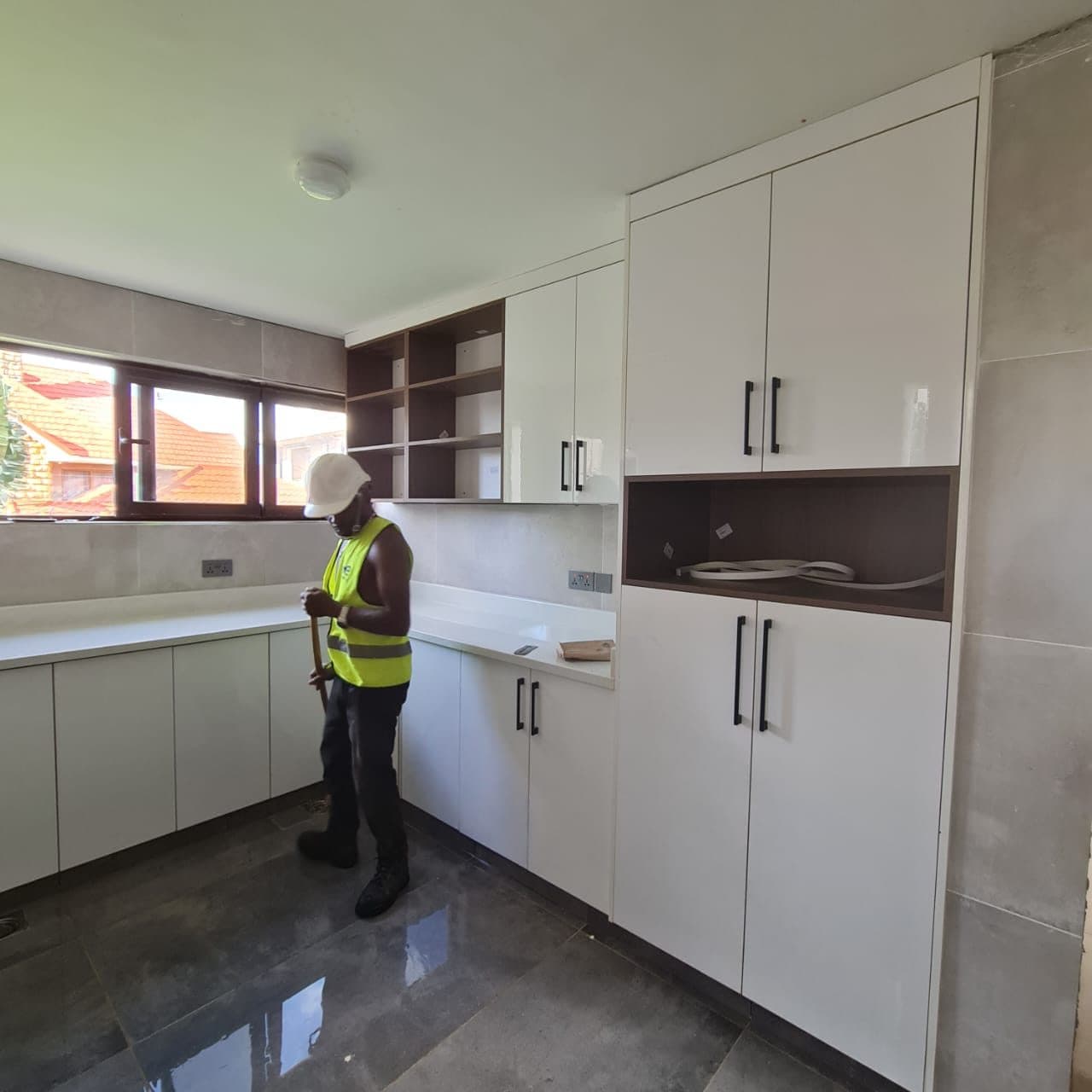
You walk the space with the project lead and list anything that is not right: a door that catches, a gap in silicone, a scratch. These are fixed before the final payment. You receive care instructions and know whom to call.
10. Aftercare
Timber-based materials move slightly through Nairobi's wet and dry seasons. A responsible firm expects to come back once to adjust a hinge or ease a door, and says so.
For a sense of how long each stage takes, read how long an interior fit-out takes.
How to choose the best interior design company in Nairobi for your project
There is no single best interior design company in Nairobi; there is the best one for your project, your taste and your budget. These are the checks that reliably find it.
Look at finished work, not renders
A render shows what a designer can imagine. A photograph of a completed room shows what they can deliver. Ask to see finished projects — and ideally to visit one, or to see a project in progress. Our own completed work is in the portfolio and gallery, and short walk-throughs are on the reels page.
Check that the work is their own
It is unfortunately common for portfolios to include images lifted from Pinterest or from other studios. Ask where a project is, when it was done and what the client's brief was. Someone who built it can answer without hesitation.
Ask who builds it
Does the firm have its own workshop and installation team, or does it subcontract? Neither is automatically wrong, but you should know who will be in your home and who is accountable for their work.
Read the quotation closely
A professional quotation names materials specifically — the type and thickness of board, the worktop material, the grade of hinges and runners — and lists exclusions. A one-line quotation gives you nothing to hold anyone to.
Test the communication
How quickly and clearly did they respond to your first enquiry? Did they turn up on time for the site visit? Did they listen, or pitch? The way a firm behaves before you have paid is the best it will ever behave.
Ask about problems
Every project has at least one. Ask a prospective designer to describe something that went wrong on a recent job and what they did about it. The answer tells you more than any testimonial.
Confirm the basics
A physical address you can visit, a registered business, a written agreement and receipts for payments. These are not formalities.
Read independent reviews
Google reviews, in particular, are hard to manufacture at volume. Read the detailed ones and note how the firm replies to any criticism.
Red flags when hiring interior designers in Nairobi
Most disappointing projects show warning signs early. Walk away, or at least slow down, if you notice:
- A price given before anyone has measured. It cannot be accurate, so it will either rise or be met by cutting quality.
- A quotation far below every other. Something has been left out or downgraded.
- Full payment requested upfront. Staged payments protect both sides.
- No written quotation or agreement. "We will sort it out as we go" is how disputes begin.
- Vague materials. "High-quality board" is not a specification.
- No samples. You should handle the actual finishes before approving them.
- Pressure to decide today. A good firm's diary is full enough not to need it.
- A portfolio with no addresses, dates or progress photographs.
- Reluctance to let you see the workshop or a live site.
- Poor communication before the deposit. It will not improve after it.
Questions to ask at your first consultation
Take this list with you. A confident designer will welcome it.
- What exactly is included in your service, from design through to installation?
- Who will be my point of contact once work starts?
- Do you manufacture and install with your own team?
- What board, worktop and hardware are you proposing, and why?
- Can I see and touch samples of every finish?
- Will I see drawings and renders before production starts?
- What is excluded from the quotation?
- What are the payment stages?
- How long will design, production and installation each take?
- What happens if I want to change something after approving the design?
- How do you protect floors, lifts and existing finishes during installation?
- What do you do if something needs adjusting after handover?
- Can I visit a completed project or speak to a past client?
How to prepare, so your designer can do their best work
Clients have more influence on the outcome than they realise. The projects that run smoothly usually have these in common:
- A decision-maker. One person, or one couple who have already agreed between themselves, with authority to approve designs.
- A realistic budget, shared honestly. Designers are not trying to spend all of it; they are trying not to design something you cannot build. Hiding the budget produces designs that have to be redone.
- References with reasons. Ten saved photographs are useful. Ten photographs each with a note — "I like the handle-less doors", "this is too dark" — are far more so.
- An inventory. Count the things that need storing. Wardrobes and kitchens are designed around quantities.
- Site readiness. Know the status of plumbing, electrical work, tiling and painting, and who is responsible for each.
- Timely approvals. Every day a drawing waits for sign-off is a day added to the programme.
- Restraint on changes. Change freely on paper. Change sparingly once boards are cut.
Common mistakes clients make
After enough projects, the same avoidable mistakes appear again and again. Knowing them in advance is worth more than any discount.
- Hiring on price alone. The quotation is the easiest thing to compare and the least reliable guide to the result.
- Starting too late. Calling a designer after the tiler and electrician have finished removes most of the options that would have cost nothing a month earlier.
- Designing from photographs of other countries. A double-height Scandinavian loft and a Kilimani two-bedroom have different light, proportions and budgets. Take the idea, not the image.
- Ignoring lighting. People agonise over door colours and accept a single ceiling fitting. Lighting does more for a room than any finish.
- Under-counting storage. Almost nobody regrets having asked for more drawers.
- Splitting the work between too many parties. Each extra contractor is another boundary where responsibility can be dropped.
- Changing the design during installation. The most expensive sentence in interior design is "actually, can we move that?"
- Skipping the snagging walk. Handover is the moment your leverage is highest. Use it, calmly and thoroughly.
Where in Nairobi do interior designers work?
Most established interior designers in Nairobi work across the city and its surrounding counties, and the logistics differ more than the design does. Apartments in Kilimani, Kileleshwa, Lavington, Westlands and Parklands bring lift bookings, working-hour restrictions and management approvals. Stand-alone homes in Karen, Runda, Muthaiga, Kitisuru and Nyari allow more freedom on site but involve larger scopes. Gated developments along Kiambu Road, in Ruiru, Tatu City, Syokimau, Athi River and Kitengela are often handed over as shells, which makes them ideal candidates for a single coordinated fit-out. Projects outside Nairobi — Naivasha, Nanyuki, Mombasa, Kisumu — are entirely possible with a firm that prefabricates in its workshop and travels to install; expect transport and accommodation to be itemised.
Royalwoods Interiors is based at the Clarion Hotel Building, at the junction of Moi Avenue and Murang'a Road in the Nairobi CBD, which puts most of the city within a short drive for site visits.
Trends shaping interior design in Nairobi
Trends should inform a design, not dictate it, but it helps to know what you are seeing on site visits and social media.
- Warm minimalism. Clean lines and handle-less joinery, softened with oak tones, textured panels and warm white lighting in place of stark white and grey.
- Fluted and ribbed surfaces. On wardrobe doors, media walls and hallway units. See our fluted wall panel guide.
- Layered lighting. LED coves, under-cabinet strips and lit wardrobe interiors in place of a single central fitting. See LED strip lighting for wardrobes, kitchens and ceilings.
- Modern African character. Local timber, woven textures, earth tones and Kenyan art within a contemporary framework. Our guide to modern African interior design explores this in depth.
- Working from home, properly. Fitted desks, pull-out workstations and acoustic consideration, in place of a laptop on the dining table.
- Storage as architecture. Full-height, built-in storage that reads as part of the wall, particularly in compact apartments.
- Longer-lasting choices. Low-odour finishes, durable materials chosen to last and LED lighting throughout.
The best use of a trend is to adopt the part of it that solves a problem you actually have.
A realistic timeline
People are often surprised by how the time divides. Installation is the short part. For a typical apartment fit-out the sequence looks something like this: one to two weeks from first contact to site visit and brief; two to three weeks of design, revisions and quotation; three to six weeks of workshop production, depending on scope and finish; one to three weeks of installation; and a few days of snagging. Whole houses and commercial spaces take longer, and imported materials or specialist finishes can add weeks.
Two pieces of advice follow from this. First, engage a designer earlier than feels necessary — ideally before the builder finishes, so that sockets, lighting points and plumbing can be placed for the design instead of the design being bent around them. Second, be suspicious of anyone promising a complete, custom fit-out in a fortnight.
Frequently asked questions
How much does it cost to hire an interior designer in Nairobi?
It depends on scope, size, materials and the pricing model. Design consultants may charge a fixed or per-square-metre fee for drawings alone, while design-and-build companies usually include design within an itemised quotation for the finished work. A single fitted element can fall under KES 1 million, while whole-home fit-outs commonly run to several million shillings. The only reliable figure is a written quotation based on a site survey.
What is the difference between an interior designer and an interior decorator?
A decorator selects furnishings, colours and accessories for a space that is already built. An interior designer plans the space itself — layout, built-in joinery, ceilings, lighting and materials — and often manages its construction.
Do interior designers in Nairobi offer free consultations?
Some do, some charge a fee that is credited against the project, and some charge separately for site visits outside the city. Ask before you book, and ask what the consultation includes.
How long does an interior design project take?
A single room or a set of wardrobes can be designed, made and installed in roughly four to eight weeks. A full apartment typically takes eight to fourteen weeks from brief to handover, and a whole house longer.
Can I hire an interior designer for just one room?
Yes. Many projects begin with a kitchen, a master bedroom or a living-room media wall. It is still worth asking the designer to consider the rest of the home, so that later phases match.
Should I hire a designer before or after construction is finished?
Before, if you can. Involving a designer while the builder is still on site means electrical points, plumbing and ceiling levels can be set to suit the interior, which avoids chasing walls and breaking tiles later.
Do I need to buy materials myself?
With a design-and-build company, no — materials are specified in the quotation and supplied by the firm. With a design consultant or an independent carpenter you may be asked to purchase materials directly.
What should an interior design quotation include?
Each item of work, its dimensions, the materials and hardware specified, the price, payment stages, the programme, what is excluded, and the terms for variations.
How do I know if an interior design company is legitimate?
Look for a physical office or workshop you can visit, a registered business, a written quotation and receipts, verifiable completed projects and independent reviews.
Can interior designers work with my existing furniture?
A good designer will. Tell them at the briefing what is staying, with dimensions, so the layout and palette are built around it.
Start with a conversation
Choosing among interior designers in Nairobi becomes far easier once you know what to ask and what a professional process looks like. If you would like to talk through a home or commercial project — whether a single kitchen or a complete fit-out — browse our portfolio to see how we work, then book a consultation. We will visit, measure, listen and give you a clear, itemised quotation you can compare with confidence.