
Material Guides · 3 min read
LED Strip Lighting for Wardrobes, Kitchens and Ceilings
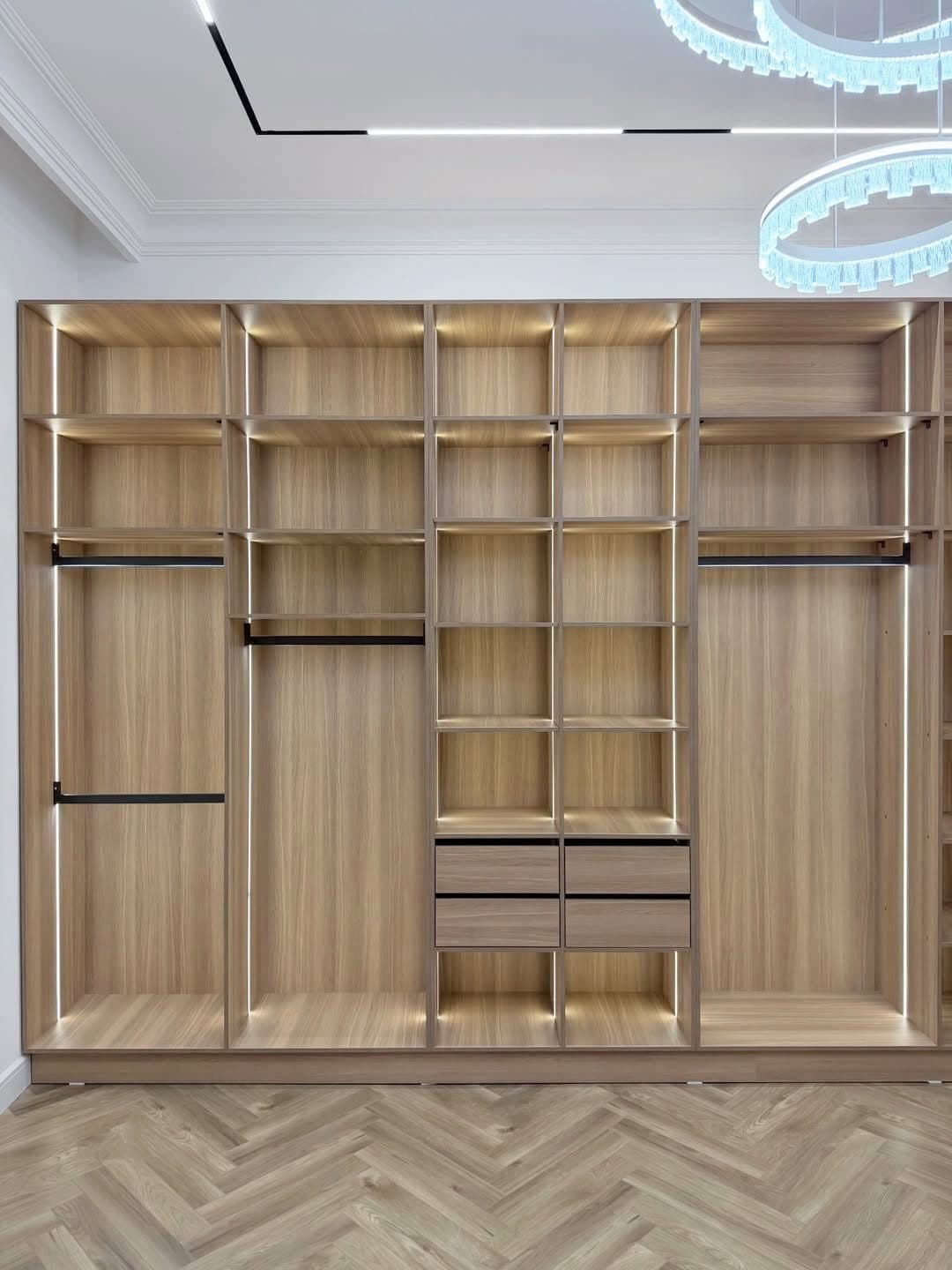
LED strip lighting has changed how interiors feel at night. Built into wardrobes, kitchen cabinets, shelves and ceilings, it gives soft, even light exactly where you need it. Done badly, it shows as a row of bright dots or a harsh blue glow. Here is how to get it right.
Where LED strips work best
- Inside wardrobes and walk-in closets, so you can see clothes clearly without a ceiling light. A door sensor switches it on automatically.
- Under kitchen wall units, lighting the worktop so you are not working in your own shadow.
- Shelves and display niches, to highlight books, glassware and objects.
- Ceiling coves, throwing light across a gypsum ceiling. See gypsum ceiling designs.
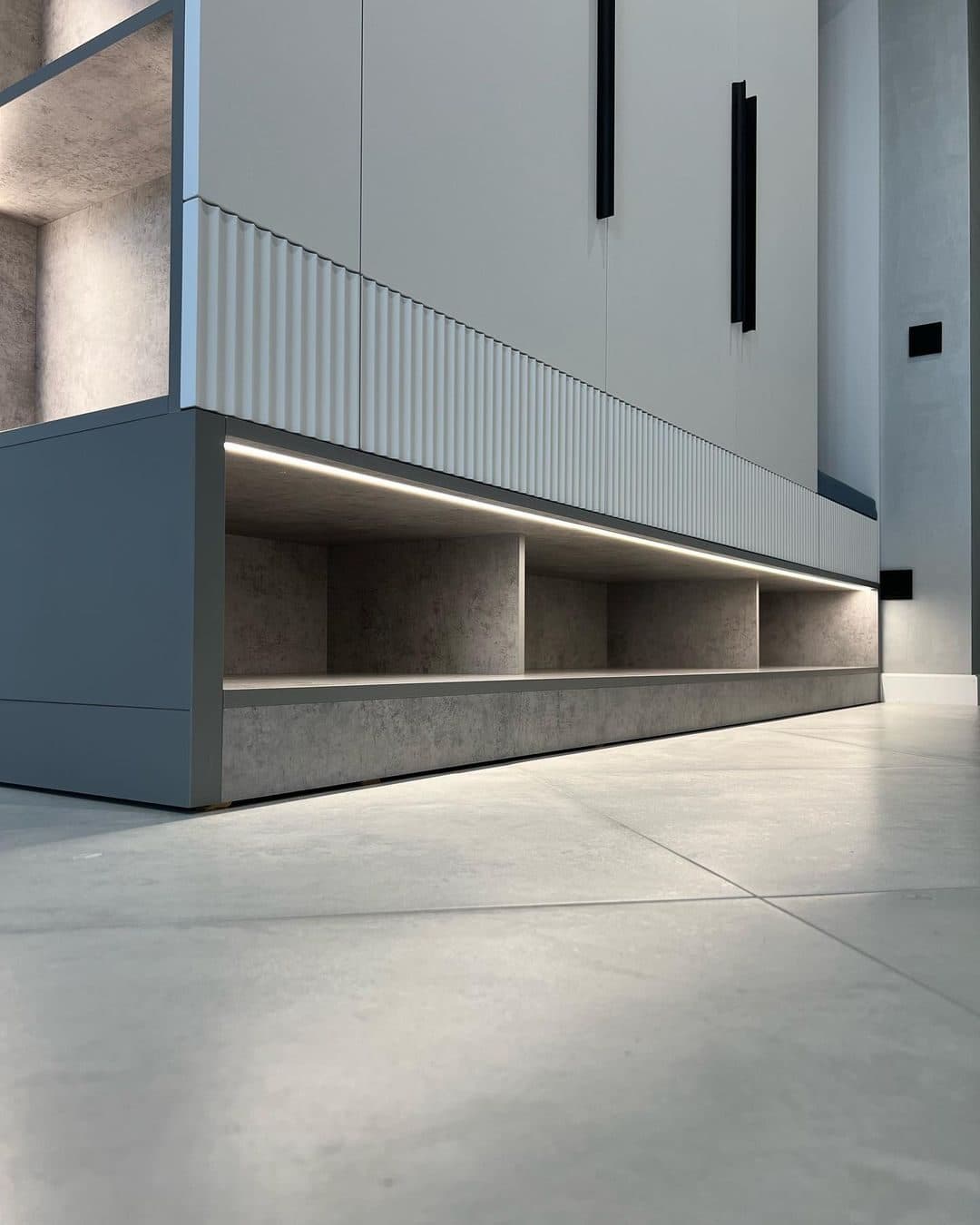
- Under benches, beds and floating units, for a floating effect and gentle night light.
Choose the right colour temperature
Colour temperature is measured in Kelvin. Warm white (around 2700–3000K) feels relaxed and suits living rooms, bedrooms and wardrobes. Neutral white (around 4000K) is crisper and works well in kitchens and work areas. Avoid mixing very different whites in one room; it looks accidental.
Always use a profile and diffuser
An aluminium profile with a diffuser hides the individual LED dots and gives a continuous line of light. It also carries heat away from the strip, which helps it last. Where the strip is recessed into joinery, the groove is cut in the workshop so the profile sits flush.
Plan the power early
LED strips run on low-voltage drivers that need a hidden, ventilated place with access for maintenance. Decide where switches, sensors and dimmers go before the joinery is made. It is far neater to route cables during the build than to add them later.
Sensors and dimming
Door sensors in wardrobes, motion sensors under beds and dimmers in living areas make lighting feel effortless. Dimming is especially useful for coves and backlit TV walls.
Understanding brightness and quality
LED strips vary in brightness (lumens per metre) and colour quality, measured by the colour rendering index (CRI). A higher CRI shows colours more accurately, which matters in wardrobes where you are choosing clothes and in kitchens where you are judging food. Choose quality strips from reputable suppliers rather than the cheapest option.
Common LED mistakes
- Strips mounted without profiles, showing a row of bright dots.
- Cool, bluish light in living spaces that feels clinical.
- Drivers hidden where they cannot be reached for replacement.
- Strips that do not reach the ends of shelves, leaving dark corners.
- Different colour temperatures mixed in one room.
LED lighting ideas room by room
Bedroom
Warm strips behind a panelled headboard or under the bed frame provide gentle night light.
Kitchen
Neutral-white strips under wall units, with an accent strip on open shelves.
Living room
Dimmable coves in the ceiling and lit display niches in the media wall.
Bathroom
A backlit mirror and a strip under a floating vanity, using fittings suitable for damp rooms.
Frequently asked questions
Do LED strips use a lot of electricity?
No. LED strips are very efficient, and in wardrobes they are only on while the door is open.
How long do LED strips last?
Quality strips in an aluminium profile, with a correctly sized driver, last many years. Cheap strips without profiles fail sooner.
Can LED strips be added to existing cabinets?
Often, using surface profiles. Recessed lighting is best planned during the build.
See lighting in our wardrobes and cabinetry and reels, or book a consultation.