
Design Ideas · 3 min read
Timber Staircase Design Ideas for Kenyan Homes
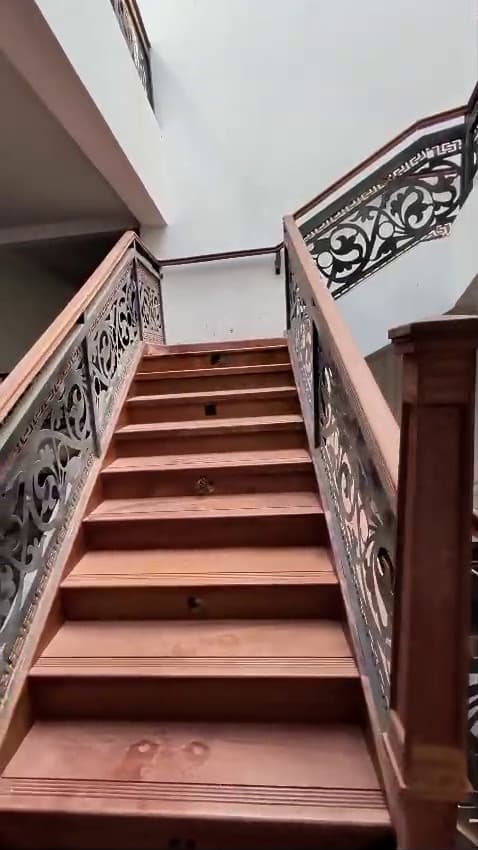
A staircase is often the first thing visitors see when they enter a house, and one of the pieces of joinery used most every day. A well-designed timber staircase is safe, comfortable to climb and beautiful enough to be the centrepiece of the entrance hall.
Choosing the treads
Hardwood treads such as mahogany and other dense timbers wear well and develop a rich colour over time. They are usually fixed over a concrete or steel structure in Kenyan homes. The nosing — the front edge of each step — should be rounded and consistent, and every tread should be level and identical in height, which is what makes a stair feel safe.
Balustrade styles
Decorative metal
Laser-cut or wrought panels paired with a timber handrail give a classic, elegant look.
Glass
Toughened glass keeps sightlines open and suits modern homes with bright entrance halls.
Timber spindles
Traditional turned or square spindles give warmth and match timber panelling.
Solid panels
A solid balustrade in panelled joinery or plaster feels architectural and hides clutter on landings.
The handrail matters most
A handrail should be comfortable to grip, continuous where possible and fixed firmly. Timber handrails feel warmer than metal and can be shaped to flow around turns and landings.
Lighting
Step lights set into the wall or under each tread make a staircase safer at night and look dramatic. A pendant or chandelier over a double-height stairwell becomes a focal point.
Plan it with the structure
Timber finishes should be decided while the structure is being built, so tread thickness, landing levels and balustrade fixings are allowed for. Changing a stair after the concrete is poured is much harder. Our guide to the fit-out timeline shows where staircase joinery fits.
Staircase shapes
Straight flight
The simplest and most economical shape, ideal for narrow halls.
L-shaped (quarter turn)
Turns at a landing, breaking up the climb and fitting neatly into a corner.
U-shaped (half turn)
Returns on itself via a landing, common in larger homes and double-height entrances.
Curved or spiral
Dramatic and sculptural, but more complex to build and needing careful joinery.
Safety details that matter
- Every step should be the same height and depth, so the stair feels natural to climb.
- Handrails should be continuous and easy to grip along the whole flight.
- Balustrade gaps should be small enough that children cannot slip through.
- Treads should have a finish that is not slippery, especially with socks.
- Lighting should reach every step, including the top and bottom.
Finishing touches
Matching skirting along the stair wall, a timber string that follows the steps and a finish that complements the floors on both levels make the staircase feel part of the whole house. Panelling up the stair wall, set out to follow the angle of the steps, adds real elegance. See our wall panelling service.
Frequently asked questions
What is the best timber for stair treads in Kenya?
Dense hardwoods such as mahogany wear well and look rich. The timber should be properly seasoned so it does not move.
Can timber be fitted over a concrete staircase?
Yes. Timber treads and risers are commonly fitted over concrete stairs in Kenyan homes.
How do you keep a timber staircase looking good?
A hard-wearing finish and occasional recoating on the most-used treads keep it looking new.
Watch our mahogany staircase reel and see the architectural joinery service.