
Design Ideas · 22 min read
Luxury Interior Design in Nairobi: What Sets a Home Apart
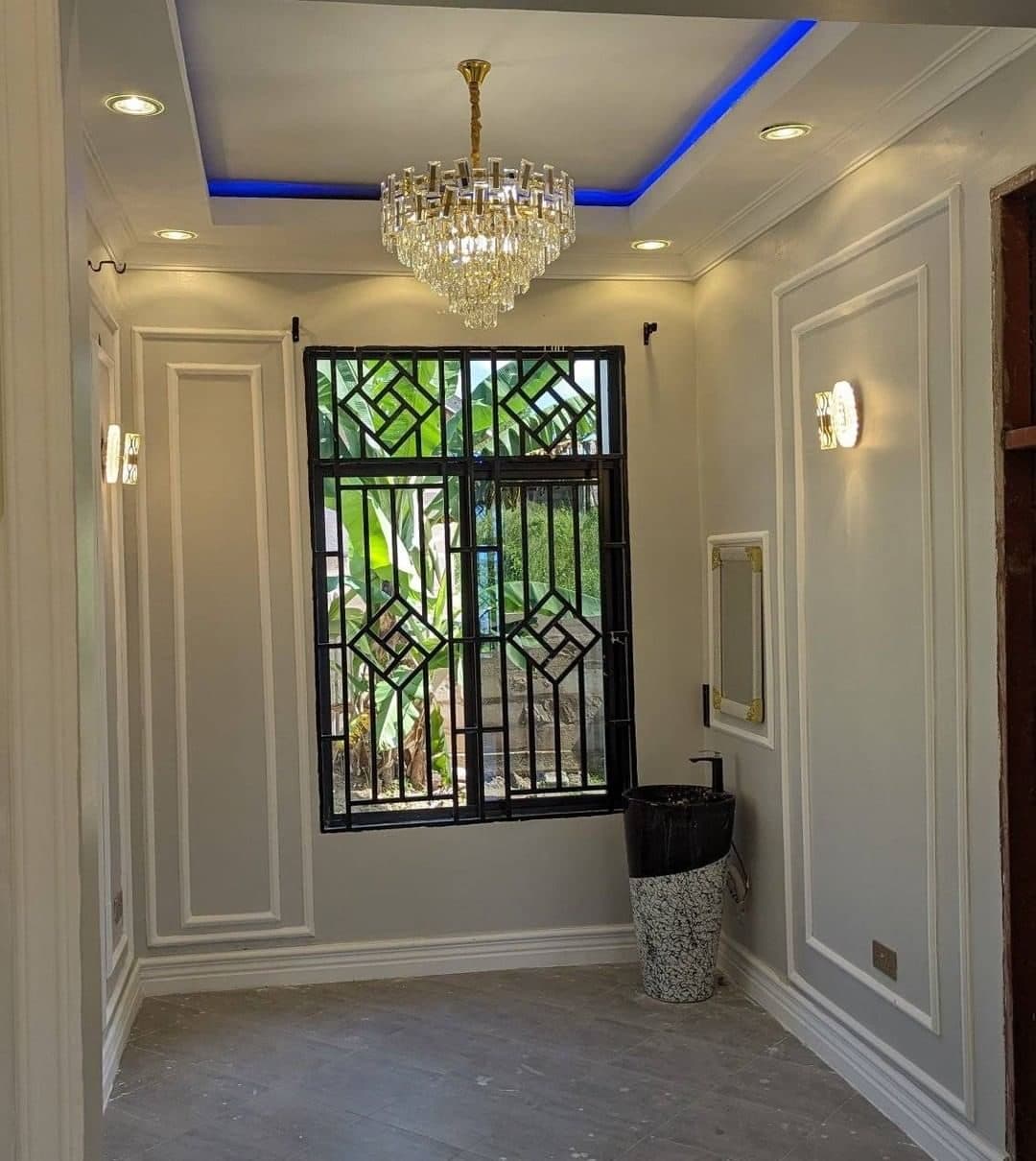
Luxury interior design in Nairobi is easy to recognise and surprisingly hard to define. Walk into a truly well-made home in Karen, Runda or Muthaiga and you feel it before you can explain it: doors that close with a soft weight, light that seems to come from nowhere in particular, joinery whose lines run unbroken from one room into the next, and a calm that has nothing to do with how much was spent on the sofa. Walk into an expensive home that misses, and you feel that too — plenty of marble and gold, and somehow none of the ease.
This guide is about that difference. It explains what luxury means in interior design, where the money in a high-end home actually goes, how luxury interior designers in Nairobi approach each room, and how to commission work at this level with confidence. It is written for homeowners planning a villa, a penthouse or a serious renovation, and for anyone who wants their home to feel better made than it currently does.
What luxury actually means
Luxury is not a style. A minimalist apartment can be luxurious; a room full of ornament can be cheap. Nor is luxury simply a price. It is a set of qualities that money makes possible but does not guarantee.
- Fit. Everything is made for this room and this household. Nothing has been adapted, trimmed or filled to make it work.
- Material honesty. Real stone, real veneer, real metal, used where they are seen and touched.
- Craftsmanship. Joints are tight, lines are straight, edges are finished, and the inside of a drawer is as considered as the front.
- Comfort. The chair is the right height, the light is where you need it, the room is quiet.
- Coherence. One idea runs through the whole home.
- Restraint. There is space around things. Not everything shouts.
- Longevity. It will look as good in fifteen years, because it was not built around this year's fashion.
Luxury is the absence of compromise you can see, and the absence of problems you would otherwise have had to solve yourself.
That last point is underrated. A large part of what clients pay for at the high end is not material but attention: someone has thought about where the vacuum cleaner lives, how the curtain stacks back from the window, and whether the bedside switch can be reached without sitting up.
Quiet luxury and the shift in Nairobi taste
For years, high-end interiors in Nairobi were dominated by a visible, glossy idea of wealth: polished marble, gold-leaf mouldings, mirrored surfaces and heavily carved furniture. That taste still has its place, and done with skill it can be magnificent. But the centre of gravity has moved. Many of the most accomplished homes being built today are quieter — matt surfaces, natural textures, warm timber, concealed lighting and very precise detailing.
This is sometimes called quiet luxury. It is harder to do than the showy kind, because there is nowhere to hide. A flat, handle-less wall of veneered doors depends entirely on perfectly matched grain and even gaps. A stone-clad wall with no trim depends on the mason's accuracy. When there is no ornament to distract the eye, the workmanship is the ornament.
Whichever direction suits you, the test is the same: is the quality in the making, or only in the price of the materials?
Where the money goes in a luxury home
People assume the budget in a luxury interior goes on visible statement pieces. In reality most of it goes on things a visitor never consciously notices.
- Substrate and structure. Thicker, more stable boards; solid lipping on every edge; properly framed panelling fixed to battens instead of glued to plaster.
- Hardware. Premium concealed hinges, soft-close full-extension drawer runners, lift mechanisms, sliding systems that glide for decades. This is the difference you feel every time you open something.
- Finishing. Multiple coats of lacquer, sanded between each; veneers selected and book-matched; edges polished.
- Lighting. Many more circuits, quality LED strips and drivers, dimming and control.
- Stone. Selected slabs, careful vein matching, mitred edges, skilled installation.
- Time. More hours of design, more workshop hours per unit, slower and more careful installation.
- Coordination. A project lead who makes sure the joinery, electrician, stonemason and painter are working to the same drawing.
A useful mental picture: in a standard fit-out, most of the cost is material. In a luxury one, an increasing share is skilled time.
Materials: the luxury palette
Timber and veneer
Natural timber veneer is the signature material of high-end joinery. Walnut, oak, ash and local hardwoods each bring a different character. What distinguishes luxury work is how the veneer is laid: sequence-matched so the grain flows continuously across a run of doors, book-matched for symmetry on feature panels, with solid timber edging in the same species. Solid hardwood appears where it is handled and worn — handrails, stair treads, table edges, door frames.
Stone
Marble, granite, quartzite and travertine remain the classic expression of luxury. Marble is beautiful and comparatively soft and porous; it suits bathrooms, feature walls and low-traffic surfaces, and it develops a patina. Granite and quartzite are harder and better suited to working kitchen worktops. Engineered quartz and large-format sintered stone offer consistency and stain resistance, and are often the practical choice for kitchens while natural stone is reserved for an island or a splashback. Details matter: mitred waterfall ends, a continuous vein across a joint, a honed finish instead of high polish.
Lacquer and paint
A flawless sprayed lacquer finish, in matt or satin, is harder to achieve than it looks and is one of the quiet signals of quality. Deep colours — olive, navy, charcoal, oxblood — in lacquer give a richness that laminate cannot.
Metal
Brushed brass, bronze, blackened steel and stainless steel, used as inlays, handles, shelf edges, trims and frames. A thin metal line set into panelling or framing a glass door is a classic luxury detail. Quality matters here: solid or properly plated metal ages gracefully; cheap gold-coloured trim does not.
Glass and mirror
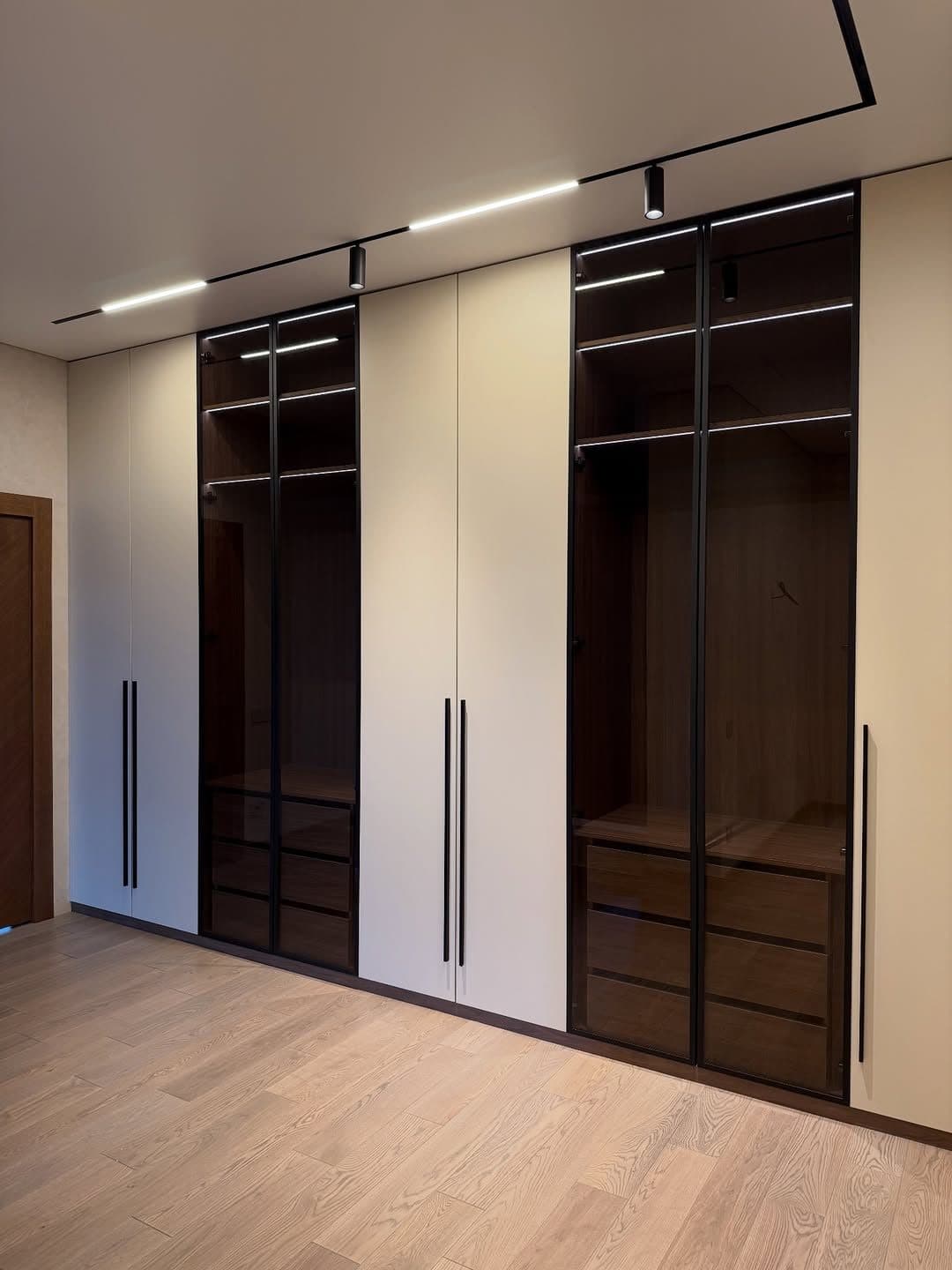
Bronze and smoked glass wardrobe doors with internal lighting, fluted glass screens, antiqued mirror panels and back-painted glass splashbacks. Glass adds depth and reflects light, and it shows off whatever is behind it — which is an argument for a well-organised wardrobe.
Leather, fabric and upholstery
Upholstered wall panels and headboards, leather-wrapped handles and drawer linings, velvet, linen and wool. Soft materials absorb sound, which is a large part of why luxurious rooms feel hushed.
Local materials
Kenyan stone, sisal, hand-woven textiles, carved timber and commissioned art root a home in its place. The most interesting luxury homes in Nairobi do not look as though they could be in Dubai or London. Our guide to modern African interior design explores how to do this without cliché.
Craftsmanship and the details that give it away
If you want to judge the quality of an interior quickly, look at these.
- Gaps. The reveals between doors and drawers should be even and narrow across an entire wall.
- Alignment. Horizontal lines should carry through — the top of the kitchen wall units with the door heads, the wardrobe plinth with the skirting.
- Grain. Does the veneer flow from door to door, or does each one look like a separate plank?
- Edges. Run a finger along them. They should be smooth, with no lifting tape or sharp corners.
- Insides. Open a drawer. Is the interior finished, the runner smooth, the base solid?
- Junctions. Where joinery meets wall, ceiling and floor: is there a clean shadow gap or scribed fit, or a bead of silicone hiding a void?
- Mitres. Corners of cornices, architraves and stone edges should close tightly.
- Sound. Doors and drawers should close softly. Panels should not rattle when knocked.
- Light. LED strips should give a continuous line with no visible dots, hidden from direct view.
None of these is about expensive materials. All of them are about care.
Lighting: the most important luxury of all
If there is one area where high-end homes most clearly separate from ordinary ones, it is lighting. A luxury lighting scheme is designed, not installed.
- Layers. Ambient, task and accent lighting on separate circuits, so each room has several moods.
- Concealment. The light source is hidden; you see the glow on a ceiling, a wall or a shelf, not the fitting.
- Warmth. Warm white in living and sleeping areas, consistent across every fitting so that nothing looks mismatched.
- Dimming. Almost everything dims.
- Colour quality. Lamps with good colour rendering make timber, stone, fabric, food and skin look right.
- Joinery lighting. Inside wardrobes, under shelves, beneath floating vanities, along plinths and handrails.
- Decorative pieces. A chandelier over the stair or dining table, pendants over an island, wall lights flanking a mirror — chosen as sculpture.
- Control. Scenes that set a whole room at one touch, and simple switches placed where the hand expects them.
Lighting has to be decided before ceilings and joinery are built, because cables, drivers and recesses are all concealed. See LED strip lighting for wardrobes, kitchens and ceilings.
The luxury kitchen
The high-end kitchen is the room where engineering and beauty meet most directly.
- The show kitchen and the working kitchen. In larger Nairobi homes it is now common to have an elegant open kitchen with an island for breakfast, coffee and entertaining, and a fully equipped closed kitchen behind for serious cooking. Each is designed for its job.
- The island. The centrepiece. Stone-topped, often with a waterfall end, seating on one side, deep drawers on the other and pendant lighting above. It needs generous clearance all round.
- Integrated appliances. Fridge, freezer, dishwasher, ovens, coffee machine and wine cooler built in behind matching doors or set flush in a tall bank.
- Handle-less lines. Recessed channels or push-to-open mechanisms keep the fronts uninterrupted.
- Stone. A book-matched splashback or a full-height stone wall behind the hob.
- Storage engineering. Pull-out larders, internal drawers, corner mechanisms, cutlery and spice inserts, concealed bins, an appliance garage with a pocket or tambour door.
- The pantry. A walk-in or cupboard pantry with shelving designed around what is stored.
- Lighting. Under-cabinet strips, lit glass display units, plinth lighting for the evening.
See our custom kitchens and cabinetry service and the guide to kitchen cabinet materials.
The master suite
In a luxury home the master bedroom is a suite: sleeping area, dressing room, bathroom and often a sitting area or private terrace.
Sleeping
A wall-to-wall headboard — upholstered, veneered or panelled — with integrated bedside units and reading lights. Curtains that run full height from a recessed ceiling track, lined and interlined, with blackout behind. A ceiling with a soft cove of light. Carpet or a large rug underfoot. Automated curtains and a master switch by the bed are small luxuries that are appreciated every day.
The dressing room
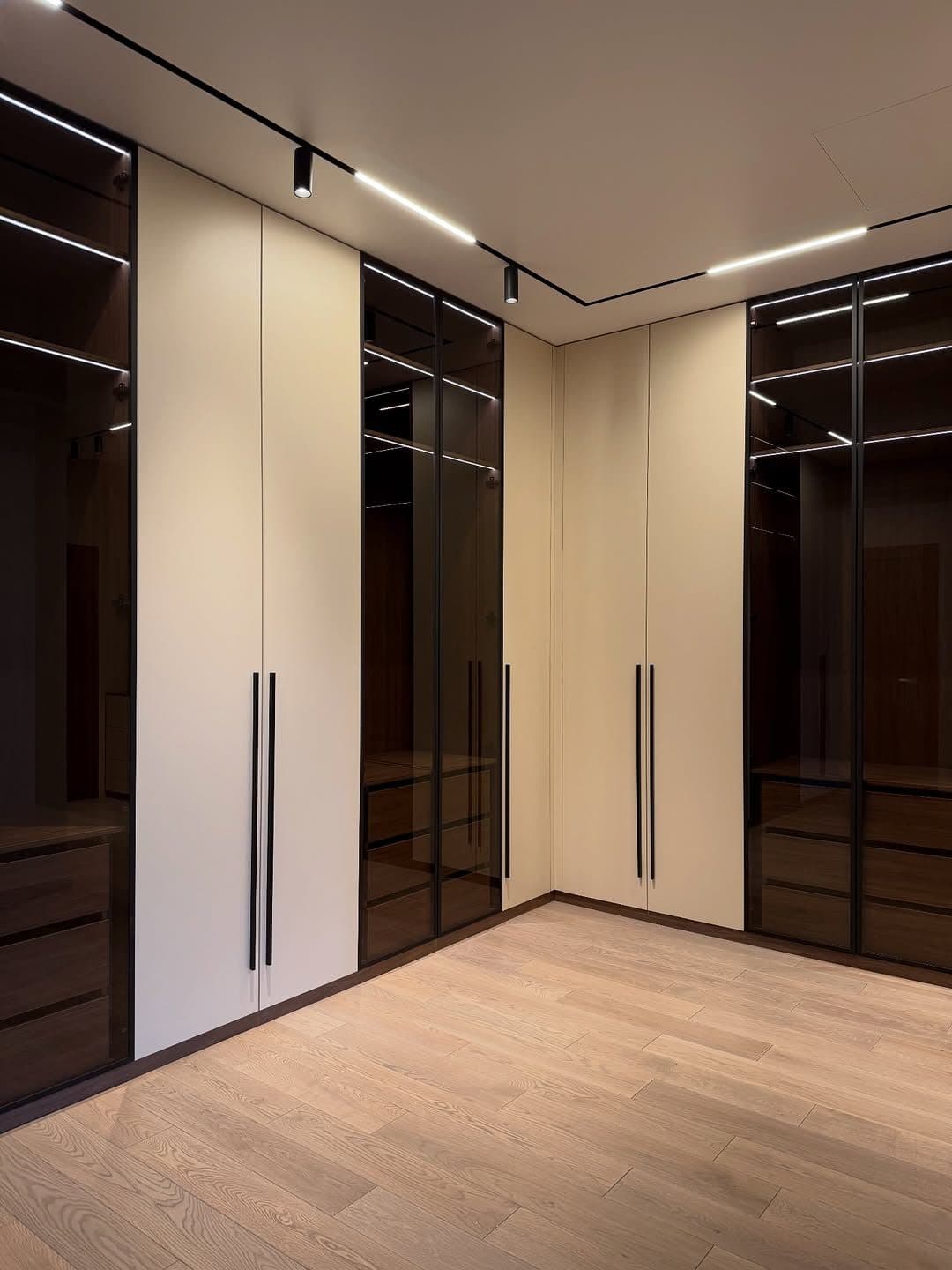
The walk-in closet is the heart of the suite. Full-height cabinetry with a mix of glass-fronted and solid doors, lit interiors, a central island with drawers for jewellery, watches and accessories, a dressing table with proper face lighting, a full-length mirror, a seat and a place for tomorrow's outfit. Shoes and bags are displayed, not stacked. Finishes are usually richer here than anywhere else in the house — dark veneer, bronze glass, leather, brass.
The bathroom
Stone or large-format porcelain on floor and walls, a floating double vanity, a walk-in shower with a rain head and a niche, a freestanding bath where space allows, a backlit mirror, heated towel rail and underfloor warmth on cold Nairobi mornings. Storage is concealed, surfaces are clear. See bathroom vanity ideas.
Living and entertaining spaces
The formal lounge
A room for conversation. Classical or contemporary panelling, a considered ceiling, a fireplace as focal point — Nairobi evenings justify one — and furniture arranged in a generous group. Art is lit. The television, if there is one, is concealed.
The family room and media room
Where the household actually relaxes. A substantial media wall with concealed storage, acoustic consideration, deep seating and blackout for daytime viewing. In larger homes a dedicated cinema room with acoustic wall panels, tiered seating and controlled lighting. See TV wall unit design ideas.
The dining room
A table that seats the extended family, a statement light above it, a built-in display and serving unit, and a connection to the kitchen that lets food arrive gracefully.
The bar and wine room
A home bar with a stone counter, glass shelving, integrated refrigeration and lighting designed to make bottles glow. A climate-controlled wine wall or room for collectors.
The study and library
Full-height bookshelves with a rolling ladder or lit alcoves, a substantial desk, leather and dark timber, and acoustic separation from the rest of the house. See built-in bookshelf design ideas and home office design ideas.
Ceilings, wall panelling and architectural detail
Architecture is what gives a luxury home its bones.
- Ceilings. Coffered ceilings in formal rooms, tray ceilings with concealed light, clean flush ceilings with shadow gaps in contemporary homes, timber-lined ceilings for warmth. See ceilings, cornices and mouldings and our gypsum ceiling guide.
- Wall panelling. Classical boiserie with raised mouldings, slim contemporary panel frames, fluted timber, veneered wall cladding with metal inlays, upholstered panels. Panelling brings order to a wall, hides doors and services, and gives a room a finished depth that paint cannot. See wall panelling and wainscoting.
- Concealed doors. Doors set flush within panelling so that a wall reads as one surface.
- Doors and ironmongery. Tall, solid doors in veneer or lacquer, with substantial handles and silent latches. See doors and architectural joinery.
- Cornices, skirtings and architraves. Proportioned to the room's height and consistent throughout.
The entrance and the staircase
First impressions are formed in the entrance hall, and in a villa the staircase is usually part of it. A double-height hall with a sculptural stair, a chandelier dropping through the void, stone flooring and a panelled wall sets the standard for everything beyond. The stair itself — timber treads, a glass, iron or timber balustrade, a handrail shaped for the hand, lighting let into the wall or treads — is one of the largest pieces of joinery in the house and deserves the design time. See timber staircase design ideas.
Technology that stays out of sight
Luxury technology is invisible until wanted.
- Lighting control with scenes and dimming.
- Motorised curtains and blinds.
- Multi-room audio with in-ceiling or concealed speakers.
- Climate control, including underfloor heating in bathrooms and air-conditioning with concealed grilles.
- Security, access and intercom integrated into the design, not screwed on afterwards.
- Charging and connectivity built into bedside units, desks and kitchen islands.
- Backup power and water — inverter or generator, storage and filtration — planned so that they are never noticed.
The discipline is to keep the interface simple. A home that needs a manual to switch on a light is not luxurious.
Villas and penthouses: designing at scale
Luxury home interior designers in Nairobi work mostly on two property types, and each has its own challenge.
Villas have volume. Double-height spaces and wide rooms need joinery, lighting and art scaled up to match, and large rooms must be zoned into comfortable groupings so they do not feel like hotel lobbies. The relationship with the garden — terraces, outdoor kitchens, pool areas — extends the interior outward.
Penthouses and large apartments have views and constraints. The design frames the outlook, keeps window walls clear, and works within fixed structure, service risers and building rules. Deliveries of large stone slabs and long joinery runs have to be planned around lift sizes.
In both, the back of house — pantry, laundry, staff accommodation, stores, plant rooms — is designed as carefully as the front, because that is what allows the principal rooms to stay serene. Our guide to residential interior design in Nairobi covers the room-by-room fundamentals.
Guest suites and the powder room
Two smaller spaces say a great deal about a home.
The powder room — the guest cloakroom near the entrance — is used by every visitor and is small enough to finish extravagantly without great expense. It is the place for the boldest stone, a dramatic wallpaper or a deep lacquer colour, a sculptural basin, a beautiful mirror and flattering light. Because it is compact, a few square metres of exceptional material go a long way.
Guest suites should make a visitor feel expected. A proper fitted wardrobe with hanging space left free, a luggage bench, a desk or dressing table, bedside lights and sockets on both sides, blackout curtains and an en-suite with somewhere to put a wash bag. Borrow the logic of a good hotel room and add the warmth a hotel lacks.
Outdoor living
Nairobi's climate is one of the great luxuries of living here, and high-end homes treat terraces and gardens as rooms. A covered terrace furnished as an outdoor lounge, with a ceiling fan, heaters for July evenings and lighting on dimmers. An outdoor kitchen or nyama choma area with stone worktops, weatherproof cabinetry, a sink and refrigeration. A pool terrace with a changing room and shower. Flooring that runs level from inside to out, so that when the doors slide back the two become one space. Outdoor joinery must be built for sun and rain — durable hardwoods, marine-grade boards, stainless hardware and finishes that can be renewed.
Colour in a luxury home
High-end palettes tend to be narrower than people expect. A base of warm neutrals — ivory, stone, greige, taupe — with natural timber, and one or two deeper notes repeated through the house: olive, ink blue, tobacco, charcoal or burgundy. The depth comes from texture and from the way light falls across matt surfaces, not from many colours.
Dark rooms can be the most luxurious of all. A study or media room panelled in walnut, a powder room in deep green lacquer, a dressing room in smoked glass and bronze — small, enclosed spaces reward boldness. Large, bright reception rooms usually reward calm.
Caring for a luxury interior
Quality materials last decades if they are looked after, and a good designer will give you guidance at handover.
- Timber and veneer. Dust with a soft cloth, wipe spills promptly and keep out of prolonged direct sun where possible. Expect slight seasonal movement.
- Lacquer. Clean with a damp microfibre cloth and mild soap; avoid abrasives.
- Natural stone. Seal on installation and periodically afterwards. Wipe acidic spills — lemon, wine, vinegar — immediately from marble.
- Brass and bronze. Decide whether you want it to patinate naturally or stay bright, and care for it accordingly.
- Hardware. Hinges and runners can be adjusted; a brief service visit after the first year keeps everything aligned.
- Lighting. Keep a record of the LED strip and driver specifications so replacements match in colour.
Brief household staff on the right products for each surface. More fine finishes are damaged by the wrong cleaner than by use.
Art, objects and styling
The last layer is the most personal. Collected art, books, sculpture, ceramics and textiles are what make a luxury interior a home instead of a show flat. Good design leaves room for them: lit niches, picture walls with proper hanging and lighting, shelving with space left empty. Kenyan and East African contemporary art is flourishing, and commissioning a piece for a specific wall is one of the most rewarding things a homeowner can do.
Styling should be edited. A few objects with meaning, given space, are more luxurious than many without.
How luxury projects are run
The process for a high-end project is the same in outline as any other, but deeper at every stage.
- A longer brief. More time understanding the household, with visits to the home at different times of day.
- Concept design. A clear idea for the whole home, with mood, materials and key views.
- Detailed design. Every elevation drawn, every junction resolved, lighting and electrical layouts coordinated, and realistic renders of the principal rooms.
- Samples and prototypes. Finished samples of veneer, lacquer, stone and metal are approved; for important pieces a sample door or section is made first.
- Stone selection. Slabs are chosen in person where possible.
- Workshop production. Slower, with quality checks at each stage and trial assembly of complex pieces.
- Site coordination. The joinery team works to a shared programme with electricians, stonemasons, painters and specialists.
- Installation by senior fitters.
- Snagging to a high standard, then styling and handover.
- Aftercare. A return visit after the first season to adjust and refine.
Our guide to turnkey interior design and renovation explains how a single team manages this from start to finish.
Budgeting for luxury
Luxury interiors are, by definition, at the upper end of the cost range, and most whole-home projects of this kind fall in the highest budget band — KES 6 million and well above. Beyond that, the figure depends entirely on area, scope and specification. Some guidance on spending it well:
- Concentrate. Put the finest materials where they are seen and touched most: the entrance, the principal reception room, the kitchen island, the master suite.
- Simplify elsewhere. Secondary bedrooms and service areas can use simpler finishes on the same quality of carcass and hardware.
- Never economise on hardware, lighting infrastructure or substrate. They cannot be upgraded later without rebuilding.
- Allow for the things outside the joinery scope: appliances, sanitaryware, decorative lighting, furniture, curtains, art and automation.
- Hold a contingency for decisions made on site.
- Phase by floor or wing if needed, but design everything at once.
Bringing luxury to a home you already own
Not every project is a new villa. Many of the most satisfying ones are existing homes brought up to a higher standard, and a handful of interventions deliver most of the effect.
- Replace the lighting scheme. Add coves, dimmers and joinery lighting; remove the single central fittings.
- Re-do the master suite. A proper dressing room and a fitted vanity change how every day begins.
- Panel the principal reception room and give it a considered ceiling.
- Upgrade doors and ironmongery. Solid doors, quality handles and silent latches throughout.
- Rebuild the kitchen around an island, integrated appliances and stone.
- Unify the finishes. One timber tone, one metal, one family of colours across the whole house.
- Edit. Remove what does not belong, and give what remains more space.
Carried out in that order, and designed together, these turn a comfortable house into an exceptional one without rebuilding it.
Common mistakes in luxury interiors
- Mistaking expense for quality. Costly marble badly installed looks worse than modest tile laid perfectly.
- Too many statements. A feature ceiling, a feature wall, a statement floor and a chandelier in one room cancel each other out.
- Copying a hotel. Hotels are designed for a two-night stay. Homes need warmth and storage.
- Gloss everywhere. Reflective surfaces multiply visual noise and show every mark.
- Neglecting acoustics. Hard floors, glass and stone create echo; soften with rugs, curtains and upholstery.
- Late lighting design. Once the ceiling is closed, the scheme is fixed.
- Fake materials in prominent places. Printed marble and plastic gold trim undermine everything around them.
- Forgetting daily life. A kitchen with nowhere for the kettle, a dressing room with no laundry basket, a lounge with no socket by the sofa.
Choosing luxury interior designers in Nairobi
At this level you are choosing people as much as a portfolio.
- See finished work in person if at all possible. Open the drawers.
- Ask who makes it and visit the workshop.
- Look for restraint in their past projects, not only spectacle.
- Check their drawings. Detailed, coordinated drawings are the best predictor of a clean result.
- Ask about hardware and substrate before you ask about finishes.
- Discuss aftercare.
- Trust your experience of them. A firm that listens carefully, answers precisely and is honest about what something costs will behave the same way on site.
For pricing models, red flags and the questions to ask any firm, see our complete guide to interior designers in Nairobi.
Frequently asked questions
What makes an interior "luxury"?
Fit, material quality, craftsmanship, lighting, comfort and coherence. A luxury interior is made for the specific home and household, built from good materials with precise workmanship, and designed as one consistent whole.
How much does luxury interior design cost in Nairobi?
Whole-home luxury fit-outs generally sit in the highest budget band, from around KES 6 million upward, and the total depends on floor area, the number of rooms, and the materials, stone, hardware and lighting specified. An itemised quotation against detailed drawings is the only reliable figure.
Is luxury interior design only for large villas?
No. A compact apartment can be finished to a luxury standard. The principles — fit, materials, detailing and lighting — apply at any size, and a smaller area can make premium materials more attainable.
What materials are used in luxury interiors?
Natural timber veneers and solid hardwood, marble, granite, quartzite and quartz, sprayed lacquer, brass and bronze, tinted and fluted glass, leather and quality upholstery, combined with premium concealed hardware.
What is quiet luxury?
A restrained approach that favours natural materials, matt finishes, muted colour and precise detailing over gloss and ornament. Its quality lies in workmanship and proportion.
How long does a luxury home project take?
Longer than a standard fit-out, because of deeper design, samples and prototypes, selected materials and slower, more careful production. Allow several months for a whole house, depending on scope.
Should I choose marble or quartz for a luxury kitchen?
Many clients use a durable surface such as quartz, granite or quartzite for working worktops and reserve marble for an island feature, splashback or bathroom, where its beauty can be enjoyed with less risk of staining.
Can luxury design be combined with African style?
Very successfully. Kenyan timber, stone, textiles and contemporary art give a high-end home character and a sense of place.
Do I need home automation?
Not necessarily. Good lighting on dimmers with well-placed switches delivers most of the benefit. Automation is worth adding where it simplifies daily life, and it should be planned before ceilings are closed.
Can an existing house be upgraded to a luxury standard?
Yes. Replacing the lighting scheme, rebuilding the master suite and kitchen, panelling the principal rooms, upgrading doors and ironmongery and unifying finishes across the house will transform an existing home without rebuilding it.
How do I look after natural stone and veneer?
Seal natural stone when it is installed and at intervals afterwards, and wipe acidic spills from marble at once. Dust veneer and lacquer with a soft cloth, clean with mild soap and avoid abrasive products. Brief household staff on the right cleaner for each surface.
When should I involve the interior designer?
As early as possible — ideally while the architect is still designing or the builder is on site — so that ceilings, lighting, electrical points and openings are built for the interior.
Commission it properly
Luxury is not bought off a shelf. It is commissioned, designed and made, by people who care about the parts you will never photograph. If you are planning a high-end home, visit our portfolio and gallery to see the standard of detailing we work to, and then book a consultation. We would be glad to walk through your home with you and talk about what it could become.