
Design Ideas · 3 min read
TV Wall Unit Design Ideas for Modern Living Rooms
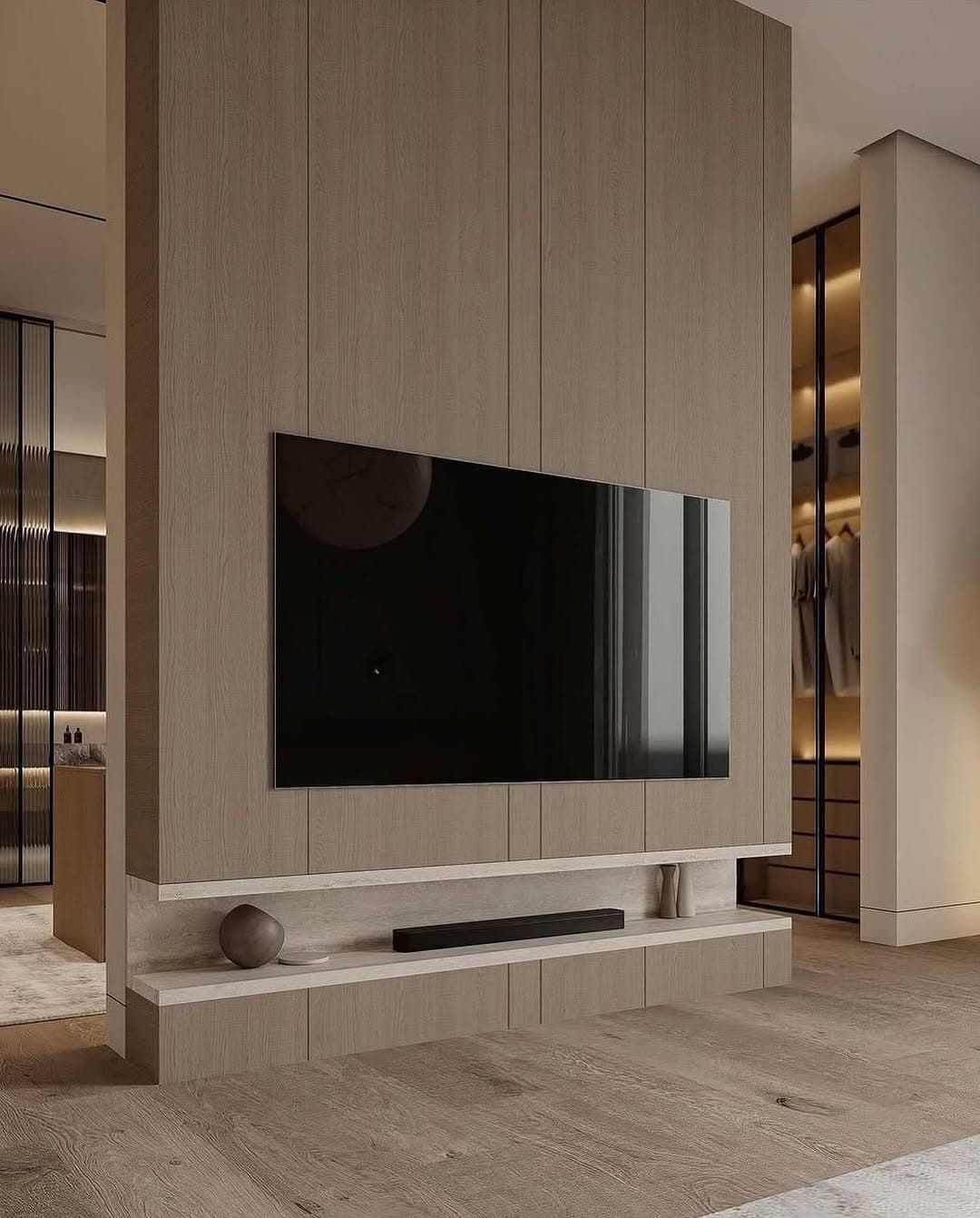
The TV wall is the focal point of most Kenyan living rooms, and too often it is a screen on a bare wall with cables hanging below. A designed media wall hides the wiring, stores the decoder, speakers and games, and gives the room a finished look even when the TV is off.
Start with the screen and the seat
Measure from the main sofa to the wall before designing anything. The centre of the screen should sit close to eye level when seated, which is usually lower than people expect. Plan the screen size into the drawing so the surrounding panels frame it properly.
Six TV wall ideas that work
- Floating console. A wall-hung low unit keeps the floor clear, makes the room feel larger and is easier to clean under.
- Fluted or slatted backdrop. Texture behind the screen adds depth and hides cable routes. See the fluted panels guide.
- Stone or stone-look feature. A travertine or marble-effect panel gives a hotel-lobby feel.
- Full media wall. Floor-to-ceiling joinery with closed storage and a few lit display niches.
- Backlit panel. A recessed LED behind the screen reduces eye strain in a dark room and adds drama.
- Bookshelf surround. Shelving either side of the screen turns the wall into a library. See built-in bookshelf ideas.
Hide every cable
The cleanest walls are planned with the electrician before the panels go up. We run a conduit from the screen position down to the console, add sockets behind the TV and inside the console, and leave space for the router and decoder with ventilation. Nothing should be visible when the work is finished.
Storage and ventilation
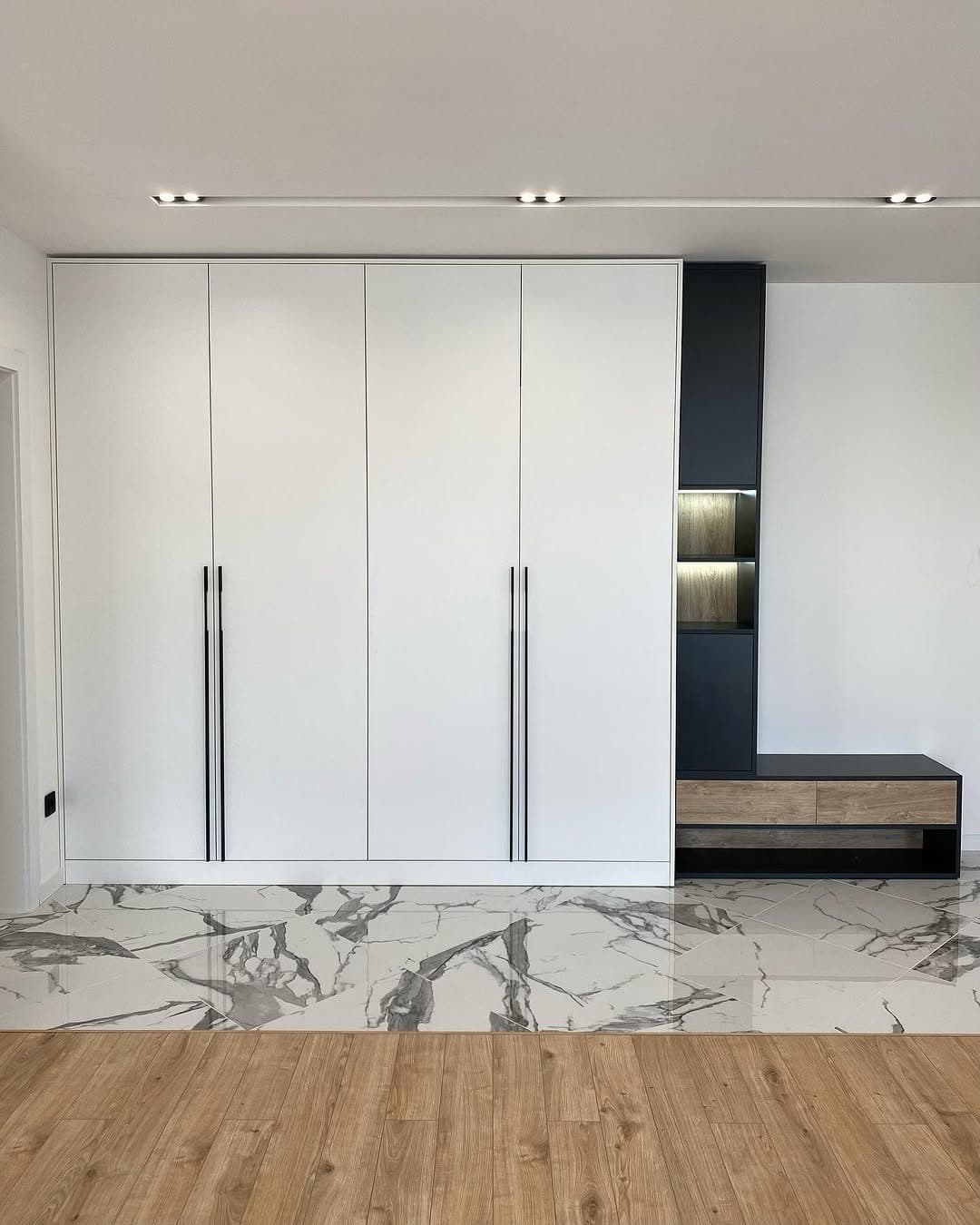
Closed drawers keep remotes and cables out of sight; a vented compartment keeps decoders and consoles from overheating. Push-to-open doors keep the front clean without handles.
Light it properly
Soft lighting behind or above the wall stops the screen being the only bright thing in the room at night. Keep direct light off the screen to avoid reflections. Our LED lighting guide covers the details.
Choosing materials for a media wall
Painted MDF gives a smooth, seamless finish in any colour and is ideal for handle-less storage. Timber veneer brings warmth and pairs well with oak or walnut floors. Stone-look panels and fluting add texture behind the screen. Whatever you choose, keep the palette to two or three materials so the wall feels calm rather than busy.
Planning for sound
If you use a soundbar or surround speakers, plan their positions before the joinery is made. A soundbar can sit in an open slot below the screen, and speaker cables can run inside the wall cavity. Soft furnishings, rugs and curtains in the rest of the room improve sound more than people expect.
Small living room ideas
- Use a slim floating console instead of a deep cabinet.
- Mount the TV on a panel rather than building a deep surround.
- Choose light finishes that blend with the wall colour.
- Add closed storage above rather than wide units on the floor.
- Keep display shelves minimal to avoid a cluttered look.
Designing for the future
TVs get bigger over time. Leave some space around the screen area and use a mounting panel that can take a larger screen later. Spare conduit for future cables costs little during the build and saves opening up the wall later.
Frequently asked questions
What is the best height for a TV on a wall?
The centre of the screen should be roughly at seated eye level. The exact height depends on your sofa and the screen size, which is why we measure on site.
Can a media wall be built in a rented apartment?
A freestanding or lightly fixed unit can be designed to come down cleanly. Discuss it with your landlord first.
How do you hide TV cables without chasing the wall?
A panelled backdrop creates a cavity for cables, so no chasing is needed in most cases.
See more in our joinery and cabinetry service, or book a consultation.